Organic Oil: How to Recognize and Choose Quality Extra Virgin Olive Oil
Organic oil represents a conscious choice that combines superior organoleptic quality, environmental sustainability, and health benefits, guaranteed by rigorous certifications.
Summary
- What does "Organic Oil" really mean?
- Certifications: The guarantee of traceability
- Superior nutritional benefits
- How to recognize a quality organic extra virgin olive oil
- In the kitchen: Versatility and health
- Sapigni Organic Olive Oil: Romagna Excellence Since 1850
- FAQ: Frequently Asked Questions about Organic Olive Oil
What does "Organic Oil" really mean?
Organic oil is produced from olives grown according to precise European regulations that prohibit the use of synthetic pesticides, artificial fertilizers, and GMOs. This rigorous specification guarantees a product that respects the environment and preserves the biodiversity of the olive groves.
A quality organic extra virgin olive oil comes from healthy olives, harvested at optimal ripeness and processed within a few hours. This rapid process, combined with cold extraction, allows the fruit's organoleptic and nutritional properties to be preserved intact.
Certifications: The guarantee of traceability
To be defined as organic, organic olive oil must be certified by authorized bodies that monitor the entire production process. In Italy, organizations such as Suolo e Salute verify that all parameters required by European regulations are met, from cultivation to bottling.
This certification represents a tangible guarantee for those who want to know the exact origin and production method of the oil they bring to the table. Furthermore, complete traceability allows for verification of every stage of the production process.
Superior nutritional benefits
Organic oil maintains a high concentration of polyphenols and natural antioxidants, just like conventional oils. These bioactive compounds contribute to cardiovascular protection, reduced inflammation, and overall well-being.
Cold pressing, a technology used in quality organic production, also preserves the fat-soluble vitamins (A, D, E, and K) and monounsaturated fatty acids essential for a balanced diet. These nutrients are preserved thanks to the absence of aggressive heat treatments.
How to recognize a quality organic extra virgin olive oil
An excellent organic extra virgin olive oil is distinguished by specific characteristics: color, fruity or herbaceous aroma, and a harmonious flavor with notes of bitter almond. These organoleptic qualities derive from the health of the olives and the speed of processing.
Also, always check for the European organic logo on the packaging, along with the certification from the inspection body and an indication of the olives' origin. A transparent label demonstrates the product's quality.
In the kitchen: Versatility and health
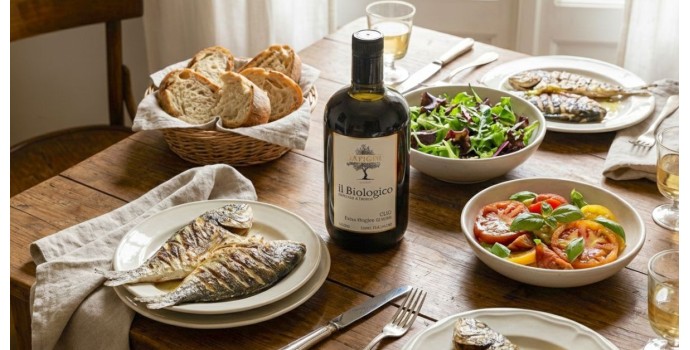
Organic oil lends itself to a variety of culinary uses. The delicately flavored varieties enhance fish, raw vegetables, and light dishes without overpowering the natural flavors of the ingredients. This characteristic also makes it ideal for weaning infants.
Therefore, choosing an organic oil means choosing a healthy and versatile product that enriches any preparation while maintaining its nutritional benefits, especially when used raw or on dishes cooked at low temperatures.
Sapigni Organic Olive Oil: Romagna Excellence Since 1850
Oleificio Sapigni produces organic extra virgin olive oil by combining centuries-old tradition with cutting-edge extraction technology. Since 1997, the Romagna-based company has been committed to selecting Italian olives grown according to organic methods certified by Suolo e Salute.
Sapigni Organic Olive Oil is cold-pressed within 24 hours of harvest, ensuring maximum freshness and quality. Its herbaceous aroma and delicate flavor make it perfect for those seeking a genuine, traceable, and environmentally friendly oil. Available in various formats, it's the ideal choice for families, restaurateurs, and foodservice professionals who prefer certified, superior - quality ingredients.
FAQ: Frequently Asked Questions about Organic Olive Oil
1. What is the difference between organic oil and regular extra virgin olive oil?
Organic olive oil differs from conventional oil in the way the olives are grown: organic farming prohibits the use of synthetic pesticides, artificial fertilizers, and GMOs. Olives are grown respecting the natural cycles and biodiversity of the soil.
Organic extra virgin olive oil must also be certified by authorized organizations such as Suolo e Salute, which oversee the entire process from cultivation to bottling. This guarantees complete traceability and rigorous quality standards.
Nutritionally, organic oil maintains a high concentration of polyphenols and natural antioxidants, thanks to the absence of chemical treatments and processing within 24 hours of harvesting. The result is a more authentic product, with preserved organoleptic properties and greater benefits for cardiovascular health.
2. How can I recognize a real organic olive oil?
To recognize an authentic organic olive oil, always check these elements on the label: the European organic logo (the stylised green leaf with stars), the certification body code (e.g. IT-BIO-006 for Soil and Health) and the indication "from organic farming".
Also check the origin of the olives: a quality organic extra virgin olive oil clearly indicates whether the olives are Italian or from which country they originate. Be wary of organic oils priced too low, as organic production requires greater costs and attention.
The organoleptic characteristics are equally important: authentic organic oil has an intense color, a fruity or herbaceous aroma, and a harmonious flavor with notes of bitter almond. The pressing date must be recent, and the dark glass packaging protects its nutritional properties from light.
3. Is organic oil really healthier or is it just marketing?
Organic oil offers tangible, documented benefits that go beyond marketing. Studies published in scientific journals demonstrate that even high- quality organic extra virgin olive oil contains high polyphenols, thanks in part to the absence of pesticides that stress the plant.
The high content of natural antioxidants protects the cardiovascular system, reduces chronic inflammation, and helps prevent degenerative diseases. Furthermore, organic oil is free of chemical residues, a particularly important aspect for those with food sensitivities or for the nutrition of children and the elderly.
Certified organic production also guarantees rapid processing times (within 24 hours of harvesting) that preserve vitamins and essential fatty acids. Therefore, choosing organic olive oil means making a real investment in your health, not just following a food fad.
4. How much does organic oil cost compared to normal oil and why?
Organic olive oil is generally 20-30% more expensive than conventional extra virgin olive oil, and this difference is justified by real production costs. Organic farming requires more labor for natural soil management and biological pest control, without the use of cheaper chemicals.
Furthermore, yields per hectare are lower: an organic olive grove produces on average 20-30% less than a conventional one, since the trees are not forced with synthetic fertilizers. Annual certification costs and inspections by authorized bodies further impact the final price.
However, quality organic extra virgin olive oil represents an investment in health and environmental sustainability. Given its superior nutrient concentration and lack of chemical residues, organic oil offers a favorable price - quality ratio for those who prefer genuine and traceable products.
5. Can I use organic oil for frying or is it better to just use it raw?
Organic extra virgin olive oil can be used both raw and for cooking, but it's important to choose the right type. For frying, choose an organic oil with a high smoke point (above 180 ° C), a characteristic guaranteed by quality cold-pressed oils with an acidity level of less than 0.3%.
However, to maximize the nutritional benefits of organic oil, using it raw is recommended: high temperatures partially degrade polyphenols and fat-soluble vitamins. Organic olive oil is ideal for dressing salads, raw vegetables, soups, pasta, and fish, where it enhances natural flavors without overpowering them.
For light cooking (max 160 ° C) such as sautéed vegetables or white meats, organic oil retains good organoleptic properties. In any case, avoid reusing oil after frying: even the highest quality organic extra virgin olive oil degrades with repeated overheating, losing its beneficial properties and forming unwanted compounds.