Extra Virgin Olive Oil Offers: A Guide to Choosing
Extra virgin olive oil offers can represent a profitable opportunity only if you know the quality parameters, the correct market prices and the best periods for purchasing.
Summary
- How to evaluate extra virgin olive oil offers
- Realistic price ranges for quality extra virgin olive oil
- The best times to buy extra virgin olive oil
- Warning Signs: When Price Betrays Quality
- How to recognize genuine quality offers
- Quality and convenience: The Sapigni approach
- FAQ: Frequently asked questions about extra virgin olive oil offers
How to evaluate extra virgin olive oil offers
Extra virgin olive oil offers proliferate, especially during certain times of the year, but not all of them represent a real bargain. Understanding the hidden value of a discount or promotion requires knowledge of the production processes and true costs of quality olive oil.
An authentic, superior-quality EVOO has significant production costs: from olive cultivation to manual and semi-mechanical harvesting, from cold extraction within a few hours to proper storage and bottling. These processes determine a base price below which quality is inevitably compromised.
Realistic price ranges for quality extra virgin olive oil
To navigate the selection of extra virgin olive oil, it's essential to know the correct price ranges. A certified quality Italian extra virgin olive oil generally falls between:
€ 12-18 per litre for good quality standard extra virgin olive oils
€ 18-25 per litre for premium single-variety or DOP extra virgin olive oils
€ 20-30 per litre for certified organic oils or limited productions
and Slow Food Presidia.
These ranges are calculated based on direct sales from the manufacturer. In traditional retail channels, prices increase due to distribution margins.
Therefore, when you find organic extra virgin olive oil on sale at significantly lower prices, it's important to carefully check the product's origin, certifications, and pressing and expiration dates. This information is often overlooked by buyers.
The best times to buy extra virgin olive oil
The price of extra virgin olive oil varies from year to year, based on the availability of the raw material. The best times to buy are:
November-December: these are the months in which we stock up on our annual supply of new, very fresh oil, just pressed.
However, if you buy directly from the producer, you might also consider purchasing small quantities from time to time throughout the year. This allows you to have a perfectly preserved oil, with its organoleptic qualities unchanged, since the producer generally has the optimal technology and procedure for best preservation, bottling according to sales trends.
Warning Signs: When Price Betrays Quality
Some indicators help to recognize when an offer hides low-quality products:
Prices below € 8 /liter for supposedly Italian extra virgin olive oils are mathematically unsustainable. Production costs alone exceed this threshold, so the oils are likely produced in older olive oil seasons, blended with lower-grade oils, or of undeclared foreign origin.
Discounts exceeding 40% off the usual price should raise suspicion. A reputable manufacturer may offer reductions of up to 10% during specific periods, but higher margins suggest inventory or quality issues.
The lack of information on the origin of the olives, the pressing date, certifications, or the generic indication "EU product" are warning signs that indicate a lack of transparency and irregularities in the product.
How to recognize genuine quality offers
Quality offers extra virgin olive oil offers have specific characteristics:
Producers communicate these products at specific times (new oil launch, end of the olive oil season, direct sales). Furthermore, they maintain prices consistent with production costs, while still offering advantages over traditional retail channels.
A reputable offer always includes complete information: cultivar, production area, pressing date, and any organic certifications. Transparency is a guarantee of quality.
Quality and convenience: The Sapigni approach
Oleificio Sapigni applies a transparent pricing policy based on actual production costs. Since 1850, the Romagna-based company has favored direct sales at the mill and online.
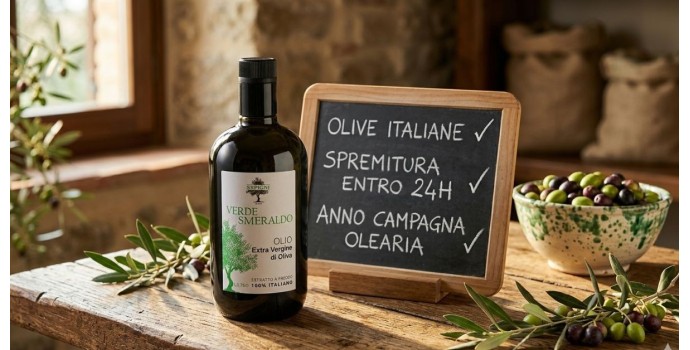
Sapigni oils—from Fruity to Certified Organic—are offered at prices that reflect the quality of the selected Italian olives, cold extraction within 24 hours of harvest, and the certifications obtained, including the Slow Food Presidium. The convenience comes from direct purchase, not from compromising on quality.
During harvest time, the oil mill offers fresh oil for those who want to stock up for the year, ensuring maximum freshness and a smart investment in their health.
FAQ: Frequently asked questions about extra virgin olive oil offers
1. How do I know if extra virgin olive oil offers are really good value?
To determine if extra virgin olive oil offers are genuine, compare the discounted price with market benchmarks: an excellent quality Italian oil retails on average between €12 and € 18 per liter from the producer and €15 and € 25 in stores. If the offer offers "Italian" oil for less than € 8 per liter, it's unlikely to be authentic.
Always check three factors: the origin of the olives (declared on the label), the harvest year (which indicates the production year), and the certifications (DOP, IGP, organic). A real bargain keeps prices consistent with real production costs: harvesting, cold pressing within 24 hours, and bottling.
2. What is the right price for quality extra virgin olive oil?
The price of certified -quality extra virgin olive oil varies based on several factors, but there are specific ranges below which quality is compromised. For standard Italian extra virgin olive oils: € 12-18 /liter (direct sales) or € 16-24 (retail).
For premium monovarietal or DOP oils: € 18-25 /liter. For certified organic oils: € 20-30 /liter, considering the higher costs of organic farming (25-30% lower yields, labor, and certifications) and Slow Food Presidia, which represent limited production with documented exceptional organoleptic characteristics.
€ 8 /liter for supposedly Italian oils, production costs are not covered. These are likely blends with foreign oils, sometimes even from previous seasons. The price of extra virgin olive oil always reflects real investments in quality, traceability, and compliance with regulations.
3. When is it best to buy extra virgin olive oil?
The best times to find extra virgin olive oil are tied to the oil's production cycle. November-December is the ideal time to buy freshly pressed oil, when its aromas and flavors are at their peak. Those who buy at the mill or online save on distribution costs.
This is the time to stock up for the year, benefiting from maximum freshness (oil that is only a few days old) and the best quality - price ratio.
For professionals and restaurateurs, it's a good idea to plan annual purchases between November and January, negotiating 3-5 litre formats directly with certified producers.
4. Are organic oil promotions reliable or are they scams?
To recognize authentic offers, check: EU organic logo (green leaf with stars), certification body code (e.g., IT-BIO-006 for Soil and Health), "organic" indication on the label, harvest season, declared olive origin, and expiration date.
Avoid "super deals" on organic oils at discount prices: organic farming prohibits chemical pesticides, requires manual weeding, and produces 25% less per hectare.
A price that's too low means quality is questionable. Choose producers with complete supply chain transparency and verifiable certifications.
5. How can I distinguish a genuine offer from a scam in extra virgin olive oil?
Recognizing scams in extra virgin olive oil sales requires paying attention to specific signs. Warning signs: prices under € 7-8 /liter for supposedly Italian extra virgin olive oil, vague labels such as "EU product" without specifying the country, missing pressing date, cheap packaging with generic labels, sales on non-specialized platforms.
Reliability indicators: specified olive origin (Italian olive origin or DOP), harvest season, verifiable certifications (DOP, IGP, organic with organization code), traceable producer information.
The most common scams involve deodorized oils (chemically treated lampante oils sold as extra virgin), blends with foreign oils passed off as Italian, and repackaged old oils. Quality EVOO can also be recognized by details: dark glass bottles (protect from light), antioxidant caps, and batch traceability.
Buying directly from mills with a verifiable history, recognized DOP (Protected Designation of Origin) or Slow Food Presidia eliminates risks. Be wary of "unmissable deals": quality oil has real costs that cannot be reduced beyond certain limits.